Skip to Content

Underfloor heating & Uncoupling mat: The perfect foundation for your tiled floor.

Underfloor heating and tiles are the ultimate combination for a comfortable and energy-efficient interior. However, to enjoy a sleek tiled floor without cracks for years to come, a good structure is essential. Discover everything here about the importance of an uncoupling mat, how to optimally combine underfloor heating with (XXL) tiles, and which solutions best fit your project.
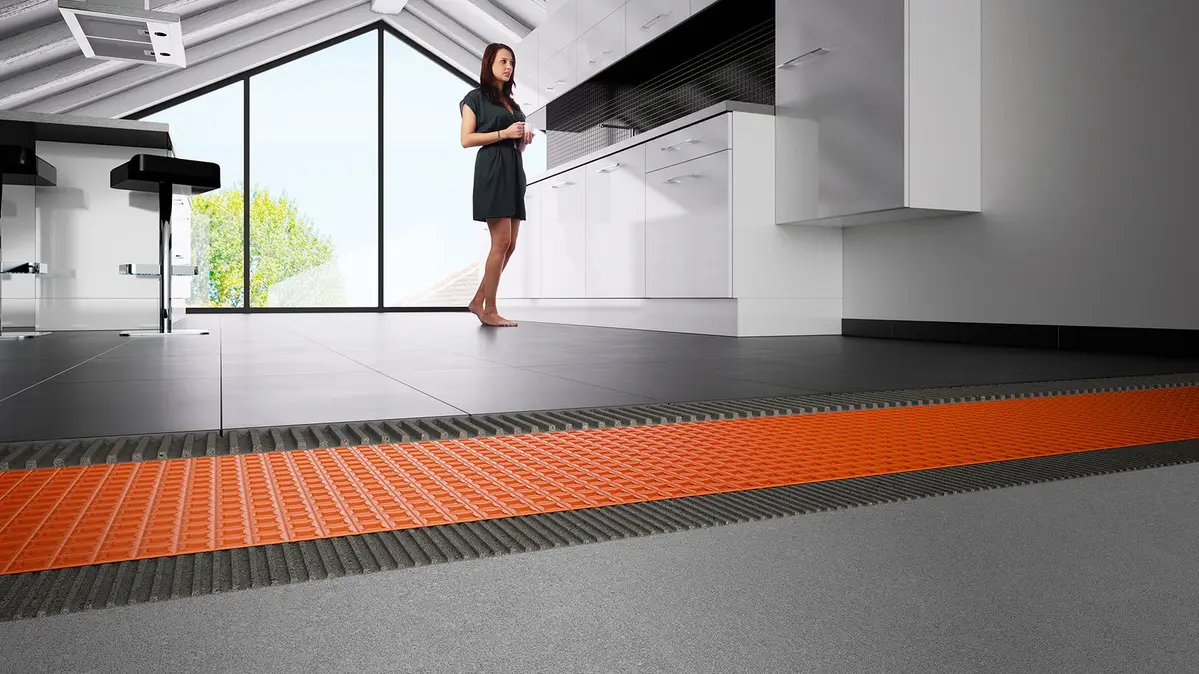
Moderne keuken met zwarte tegelvloer, vloerverwarming en oranje ontkoppelingsmat voor optimale warmtegeleiding

Why choose underfloor heating under tiles?

  • Even heat distribution: No cold spots, always a pleasant temperature.
  • Energy-efficient: Lower energy costs due to efficient heat release.
  • Space-saving: No more radiators needed, allowing for more design freedom.
  • Perfectly combinable with ceramic tiles:Tiles conduct heat optimally and are durable.

What is an uncoupling mat?

A section with features highlights the key characteristics of your product, attracting visitors and stimulating conversions.

Functions of an uncoupling mat:

  • Prevents cracking due to stresses and movements in the substrate.

  • Ensures optimal heat conduction with underfloor heating.

  • Protects against moisture and acts as additional insulation.

  • Increases the lifespan of your tiled floor, especially with large formats such as XXL tiles up to 120x280 cm.

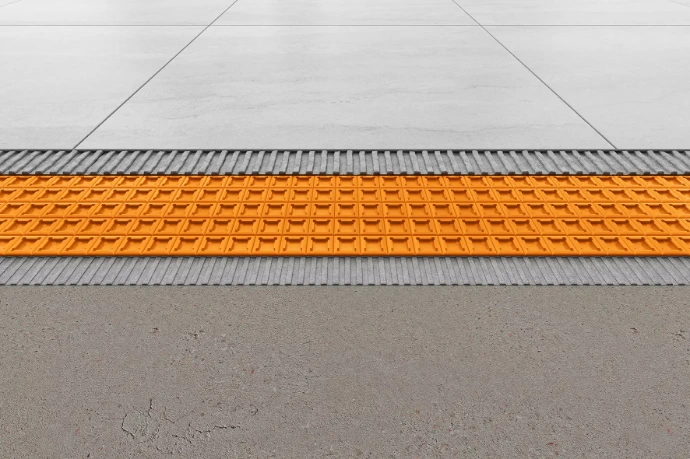
Detail van oranje ontkoppelingsmat geplaatst tussen chape en tegelvloer voor vloerverwarming

Step-by-step plan: Laying tiles on underfloor heating

  1. Check that the screed is completely dry and level.
  2. Install the uncoupling mat according to the manufacturer's instructions.
  3. Use flexible tile adhesive suitable for underfloor heating.
  4. Install the tiles with a minimum joint width (recommendation: 2-3 mm).
  5. Allow the floor to gradually reach temperature after installation.

When is an uncoupling mat necessary?

  • When laying large or XXL tiles (from 60x60 cm to 120x280 cm)
  • On new screed or with underfloor heating
  • During renovation on existing floors or sensitive substrates
  • In areas with significant temperature fluctuations or moisture load (bathroom, kitchen, wellness)

Frequently asked questions about underfloor heating & uncoupling mats

Is an uncoupling mat mandatory with underfloor heating?


Not always legally required, but strongly recommended for a durable, crack-free floor – especially with large formats and new screed.

Do I lose heat through an uncoupling mat?

No, quality uncoupling mats are specially designed for optimal heat conduction.

What adhesive do I use on an uncoupling mat?

Always use a flexible (C2 S1/S2) tile adhesive suitable for underfloor heating and large tiles.

Can I combine XXL tiles up to 120x280 cm with underfloor heating?

Yes, large tiles are ideal for underfloor heating, provided they are installed with an uncoupling mat and the correct adhesive.

How long should I wait before turning on the underfloor heating after installation?

Allow the floor to cure for at least 7 days before you gradually start up the underfloor heating.

Advice & Service

Are you unsure about the right structure or materials? Our tile and underfloor heating experts are ready to provide personal advice, both for new builds and renovations.

Contact us for free advice